


Sensuality, ageing and embodiment ~ with Juliet Allen
In a culture that teaches women to resist time, the process of ageing naturally can feel confronting, and changes in our appearance can carry deeper questions about identity, visibility, desire, and self-worth.
Global leading Sexologist and educator, Juliet Allen has spent years guiding women back into relationship with their bodies, their sensuality and their innate self-trust. Her work invites a different perspective on ageing that moves beyond correction or reversal, and instead honours the emotional, psychological, and spiritual shifts that unfold as we grow and evolve through life’s transitions.
In this conversation, we explore the cultural pressure to “restore” youth, the deeper needs women may be seeking when they turn to aesthetic interventions, and what becomes possible when ageing is reframed not as decline, but as initiation into becoming whole.

In your recent post about Botox, you speak to pausing before intervening with our faces. What do you feel women are actually seeking in that moment - and how might those needs be met beyond aesthetic procedures?
I believe many women are seeking to feel like themselves again. They’re seeking youth because youth has been positioned as the pinnacle of beauty. They’re seeking reassurance because we live in a culture that tells us that our value as women peaks early.
When a woman looks in the mirror and notices change in the way she looks, it often stirs something deeper than aesthetics. It brings up identity. Visibility. Desire. Questions about worth. Questions about beauty. Questions about whether she is still wanted.
The problem is that we’re surrounded by “anti-ageing” language - as though ageing is something to battle, reverse, or correct. As though time moving across our faces is a flaw. Of course women feel pressure. Of course they feel the pull to restore what once was!
But instead of rushing to intervene, the best way forward is to seek support. Therapy to unpack what ageing brings up emotionally. Conversations that normalise the grief and the deep initiation of this phase. Role models who embody magnetism without relying on botox etc. Women who value wisdom over smooth skin.
I’m not anti-Botox. If a woman chooses it from self-trust, that’s her sovereignty. But I think it’s powerful to ask:
Am I trying to stop time - or am I afraid of what time represents?
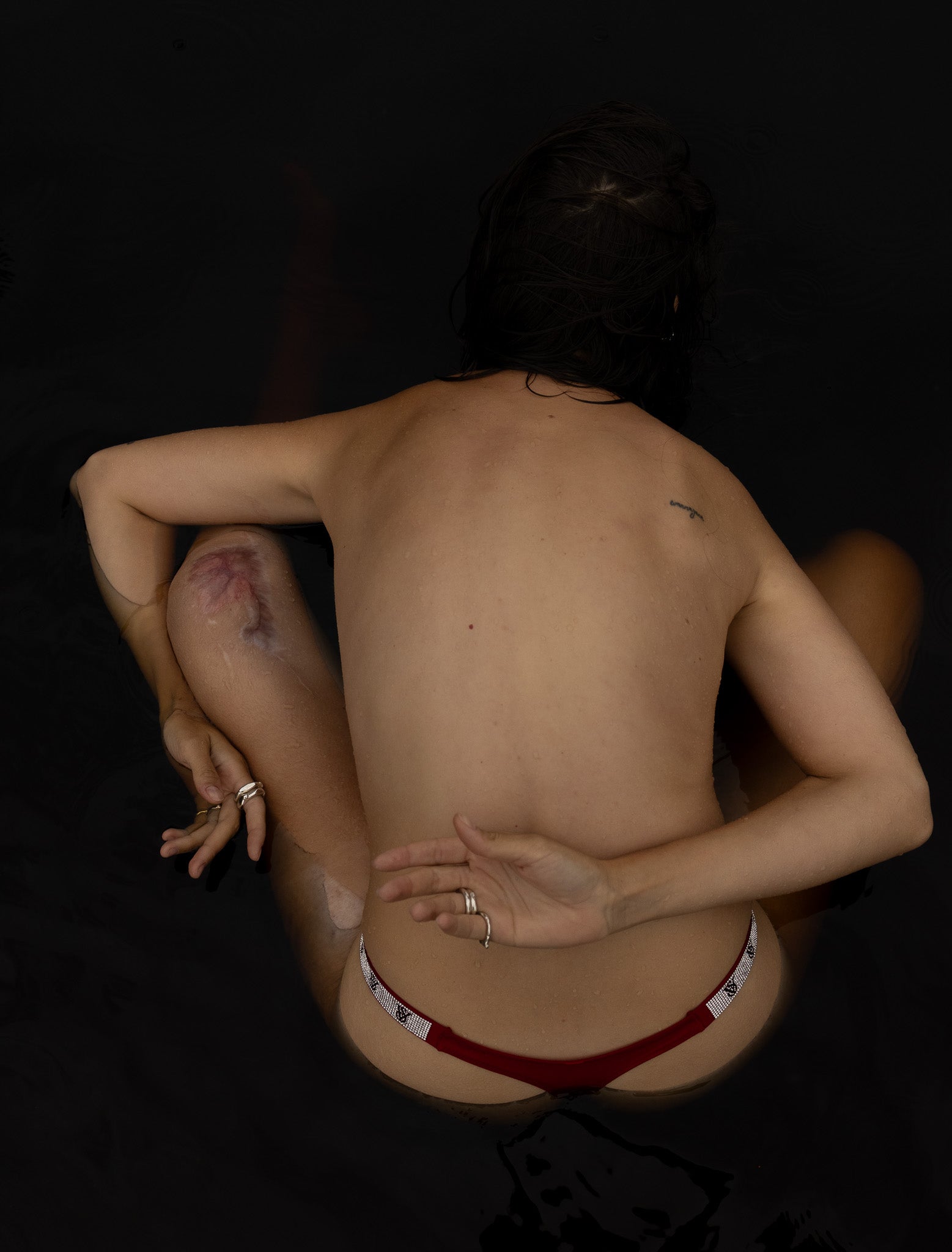
Ageing brings gifts - depth, discernment, sensuality that isn’t performative, confidence that doesn’t beg for approval, emobodiment... lived wisdom!
When we see women who honour those gifts, it expands what beauty can look like. And that’s the shift I care about.
You often encourage women to stay in relationship with their bodies. What does that look like when we’re navigating ageing - especially in a culture that treats ageing as something to fix rather than feel?
Staying in relationship with your body as you age means refusing to abandon her when she changes. It means noticing the instinct to criticise, correct, tighten, inject, restrict - and instead getting curious. Ageing asks us to feel more, not less. To embody more, not less.
In a culture that treats ageing as a problem to solve, staying in relationship looks like slowing down when the discomfort arises. Sitting with the grief of what once was. Allowing the identity shifts. Letting yourself feel the vulnerability of becoming visible in a new way.
It’s easy to love our bodies when they align with cultural standards. It’s deeper work to love them when they don’t.
Staying in relationship means:
- Listening to what your body needs now - not what it needed at 25.
- Honouring new rhythms.
- Adjusting how you nourish, move, rest, and express yourself.
- Letting your sensuality evolve rather than trying to preserve it in its former shape.
It also means expanding your definition of beauty.
Wrinkles are evidence of expression and a lived life! Softness can be a sign of lived experience too. Lines can hold laughter, grief, birth, devotion.
When we treat ageing as something to feel rather than fix, we gain access to a different kind of power - one rooted in depth, discernment, and self-trust.
For women who do choose Botox or cosmetic interventions, what do you believe is the difference between an empowered choice and a conditioned one? How can we discern between the two?
I don’t believe the procedure itself determines whether a choice is empowered or conditioned. I believe the energy underneath it does.
An empowered choice feels spacious. Grounded. Calm. It comes from self-trust and self-love - not urgency or desperation.
A conditioned choice often feels reactive. Tight. Slightly panicked and rushed. It carries a subtle fear of becoming less - less desirable, less relevant, less worthy as a woman.
One question I often encourage women to ask is:
- If no one else were watching - would I still want this?
And:
- If ageing were not positioned as a problem, would I still feel the same urgency to change my face?
Conditioning tends to be driven by comparison, by scrolling, by internalised messaging that youth equals value. It’s often influenced by a collective nervous system that fears decline. Empowerment, on the other hand, feels sovereign. It allows for nuance. It says: I see the cultural pressure - and I am choosing consciously anyway.
You can discern between the two by noticing your body.
Is there contraction or expansion?
Is there shame or neutrality?
Are you trying to fix yourself - or simply express yourself?

If ageing were reframed as an initiation rather than a decline - what practices or perspectives do you think would help women meet this phase with more reverence and less resistance?
If ageing were reframed as an initiation rather than a decline, everything would change. Right now, most women move through ageing alone - privately negotiating the grief, the identity shifts, the hormonal changes, the changing face in the mirror. There are very few cultural markers that say: You are crossing a threshold. This matters. This is sacred.
Historically, women were guided through life stages with rites of passage - held and witnessed by elders who had walked the path before them. There was context. There was ceremony. There was meaning.
We’ve lost much of that. Instead of being initiated, we are marketed to. Instead of being witnessed, we are sold solutions.
If we brought back rites of passage - spaces where women could gather, be witnessed, and consciously mark the transition into midlife and beyond - I believe there would be far less resistance.
We would honour the grief of what is changing and we would celebrate the power that is emerging. We would be led by elders who embody magnetism, sensuality, and wisdom in ageing bodies.
Perspective shifts everything.
Which INBLUEM ritual are you currently reaching for, and how does it support the way you want to feel in your body and skin as you move through this season?
Morning and night I love to use the Kakadu Plum Serum and then the face oil over the top. It makes my skin feel so plump and smooth! So simple, yet so effective I also love the sponge to exfoliate!
You speak often about pleasure as a compass. How can women reconnect to pleasure in their bodies during seasons when they feel disconnected from themselves?
When I speak about pleasure as a compass, I’m not talking about constant bliss or peak sexual experiences. I’m talking about sensitivity. Aliveness. The ability to feel.
In seasons of disconnection - postpartum, midlife, burnout, heartbreak, grief - pleasure can feel far away. And the instinct is often to push harder or judge ourselves for not being “lit up.” But reconnection doesn’t start with intensity. It starts with safety. The nervous system has to feel safe before the body can feel pleasure.
So the first step is often very simple: slow down. Reduce input. Create small pockets of quiet. Begin noticing neutral sensations - the warmth of water on your skin, the weight of your body in the bed, the feeling of breath moving through your chest.
Pleasure returns through presence.
Then it’s about micro-moments. Not demanding fireworks - but inviting subtle sensation back online.
A hand resting on your heart. Gentle self-touch without an agenda. Time unrushed in nature. Movement that feels nourishing rather than punishing.
So instead of forcing pleasure, we build capacity for it. We tend to the stress. We process the grief. We create support around us.
And slowly, the spark returns - not as performance, but as quiet warmth.
Pleasure is not something we achieve. It’s something we allow.
And even in seasons of numbness, the body is still wise. Still waiting. Still capable of coming back online when we meet her with patience and devotion.

So much of your work invites women back into self-trust. What is one belief about ageing or beauty you hope the next generation of women no longer carries?
I hope the next generation of women no longer carries the belief that their value peaks in youth. That beauty has an expiry date. That desirability belongs only to the young. That ageing is something to apologise for or conceal.
I want them to know that magnetism deepens with self-trust. That confidence becomes more embodied with time. That lines and softness can hold power.
And that a woman does not become less as she ages - she becomes more herself and that's sexy AF!
As a mother, partner, and creator, you’re constantly birthing new things into the world. What feels most meaningful to you to be creating right now?
What feels most meaningful to me right now is something I'm creating as a sexologist - a new space where women don’t have to compartmentalise their sensuality, their intellect, their motherhood, their ambition, and their desire.
I’m building something behind-the-scenes that gathers all of my work - the embodiment, the intimacy teachings, the sexual reclamation, the nervous system safety, the leadership - into one living ecosystem. It's a place where women can enter at any stage of life and be supported to feel more alive, more expressed, more connected to their bodies and relationships. I am SO excited about this offering, it's powerful. And needed in our world.
It’s not just content or another 'course'. It’s proximity to me and other epic teachers. Community. Ongoing integration.
After years of birthing one-off courses and programs, what feels deeply meaningful now is creating a long-term home - somewhere women can evolve inside rather than dip in and out of. It feels like the most aligned thing I’ve built yet as a sexologist. It launches April 13th to the waitlist!
When do you feel most in bloom?
When I'm pregnant. No doubt about it. I LOVE being pregnant.
To learn about Juliet Allen and her offerings, visit https://www.juliet-allen.com/

Leave a comment
This site is protected by hCaptcha and the hCaptcha Privacy Policy and Terms of Service apply.