

Article: Milari Barker - Skin Story
Milari Barker - Skin Story

Our Journal is a place of belonging - a space to inspire reflection and honour the beauty of blooming in all its forms.
At INBLUEM, our philosophy is simple: To encourage connection: to yourself, to one another, and to the land.
Our creations are designed to support you through every season of life, inviting intuitive rituals that evolve alongside you.
Nature reminds us that blooming is only one part of the cycle. There is also seeding, sprouting, blossoming, the inevitable decomposition and the regeneration that follows - each phase carrying its own wisdom. Yet we often overlook the less celebrated seasons of growth that make renewal possible.
This month, our founder, Montana Lower sat down with a dear friend and inspiration, Milari Barker, to explore regeneration through her experience of living with physical disability. Following a near-fatal motorbike accident in 2024, Milari was called into a profound journey of healing, presence, and self-discovery.
In the following interview, she shares her experience of rebuilding, reconnecting, and finding herself once more - in bloom.

As I understand, you were raised between the Kimberley and Paris — moving between cultures, landscapes, and ways of being. What did living between these worlds teach you about identity, belonging, and yourself?
Still today, with pride and my fathers words in mind - “Culture is never static”. I explore how I am of all those landscapes and the singular multiplicity that lives within me. My work is a constant and true resonance of this. I am a Polish–Aboriginal woman raised in a home where identity was never conceived as fixed, but as a rhizomatic system—interconnected like nomadic roots, echoing the philosophy of Gilles Deleuze and Félix Guattari. In what is becoming, we live in constant mutation. Culturally, that resonates for me, as skin and cells hold memory, as does Country.
This was further reinforced with the multicultural diaspora we grew up in at home in Paris and Broome, as it was during our travels to other places. There is so much I could say here but the reality is, being of multiple cultures and speaking the languages means I often feel the itch of imposter syndrome, not knowing why I can feel belonging with most yet nowhere. I now know it makes me feel the world deeper, appreciate and recognize its diversity and pain.
You’ve moved through many physical transitions, with this recent chapter asking you to meet your body in new ways as you heal. What has this experience revealed to you? Do you find yourself seeing differently now — and how do you feel the presence of diverse bodies and cultures shapes the way we understand ourselves and each other?
Yes, fuck, so much. I have been pulled up by my old people [ancestors] in the most necessary yet violent way. For one, I hear them. The warm calloused breath of those before and after me, this path somewhat easier to walk thanks to that. Not literally though! I am still fighting to heal my leg and the world is very different from my wheelchair. It is a diversity I had not fully acknowledged before this accident, and one most won’t.
You’d think the lesson is to be grateful for what you have, yet what I have found is myself practicing gentleness in how I treat myself and others - my body and the collective world. I wish this amongst other wisdoms could be found without pain and trauma.
In times of upheaval or change, what does Country teach you about resilience, patience, or belonging?
I actually said this to Nidala the other day, that grief or pain turns your everyday rituals into Ceremony. What I mean by this is that once you learn to sit in discomfort, every effort and decision has purpose and power.
Choice leads to creating a system of presence that feels somewhat ceremonial. A shower was always my ultimate ritual and it turned to ceremony after it was denied to me because of my inability to stand or wet skin. Watching the Bruns river tides, either from within when I could finally swim amongst the jinup [stingray], or from a paddle or the bank, was a foundation in teaching me patience.
There is no doubt that although I am a Djugun Jabirr Jabirr woman from the Kimberley, that Bundjalung country heals me because I chose to be here. Since the accident, it seems everything I do, as well as the sensorial scope I seek, is deliberate. I recognize it for what it is and that makes my conversation with Country more fluent.

You’ve lived inside the world of high fashion — an industry that can be both creative and demanding. Looking back, what did that chapter teach you about identity, worth, and self-expression?
I was always a bit lost, a people pleaser desperate to be seen, but my itinerant upbringing gave me the tools to navigate the people and the work with confidence. At 16, I was discovered by Noriko Ishizaka and I worked my way through exclusive spaces. Paris sang to my creative mind, swallowing me whole, I first worked for Yasuko Furuta’s brand Toga Archives while in high school. I absorbed and learnt an insane amount as well as hard lessons on holding my worth and the value of my ideas.
Recognition is a sore issue in my family and my own story.
Although painful, it was a reminder of my talents and I spent the last two decades successfully proving them in a world that is inaccessible to most. My face and body captured by David Sims, my art featured in global campaigns, collaborated and walked runways for designers I call friends. Most of them wear my jewellery, which has been featured in magazines and on stage, as has my ‘Skin.ship’ piece. I love the people and the life I’ve had and how incredibly hard it was, wringing me violently so I tasted just how potent those juices were. It taught me without a doubt that what I do and what I make is Story - that it makes people feel and listen. It is the adaptable essence of who I am, and it hasn’t changed.
As it was, in march last year, my body walked a show in crutches! Shauna [P.A.M] is one of the important chosen kin in my life that always makes me know my worth, through trust and loyalty, both as a friend and in work. I am stronger and braver for it.
After your accident, you were invited to reorient your life around what truly matters. What has come into sharper focus for you?
I was already trying to rebuild myself from shaky foundations after a previous violent transformation from addiction. This accident aligned everything. It removed the blinds and took the pressure off. I felt the world outside of my own lens and ambitions. In a world that has no expectations of you because it is burning, who are you and what do you really need? It made things slow down and it made clear what I did or didn’t deserve.
The lesson: you actually get to choose yourself. If you are not fed, you cannot feed others. It is not a selfish thing to answer your needs, it is your duty.
We are nature, and caring for ourselves means caring for Country. Start there. Maybe I was able to sever the expectations I had of myself because of all I had already done and lived but I know it was the best and only decision. I have more to look forward to, thanks to this change. A change as big as the trauma that caused it.

What does the power of womanhood mean to you in this season of your life?
Started with a huge pivot. Now single, I chose myself, read an outrageous amount of smutty fantasy books, reinvested in my own skin, my own pleasure and my own mind. I am learning to love myself deeply by nurturing little Milari that suffered hurt and punishment.
It has been a really visceral process that I have had a lot of help with, both personal and professional. The power of woman made obvious as I recognize just how much stamina and beauty we are capable of. Resilience in womanhood is compelling and sovereign.
In your view, how can creative industries hold Indigenous voices and stories with greater respect, depth, and integrity?
This! I say ask that exact question to every Indigenous voice you collaborate with or want to support. To me there is a big one: Get the name right, the person's Country right and spell it correctly! If you don’t know, ask them. Honestly, this goes for all indigenous peoples, as names and places hold meaning. You can then talk and learn to respect it. This offers a foundation for safe practice in cultural spaces, allowing those voices to feel respected.
Integrity is one we could all pursue more. It often lands wrong because most collaborations or spaces offered come from a place of exploitation or marketing pursuits. Find ways to return space and power as well as support, and give back to those voices and where they come from, their communities. Allow them to situate themselves in the context of today, past tokenism and profit focused spaces we are made to fight for. This is power you have that once acknowledged and relinquished can change systems.
Our skin holds memory. How has your relationship with your body — and the stories carried in your scars — evolved since your surgeries?
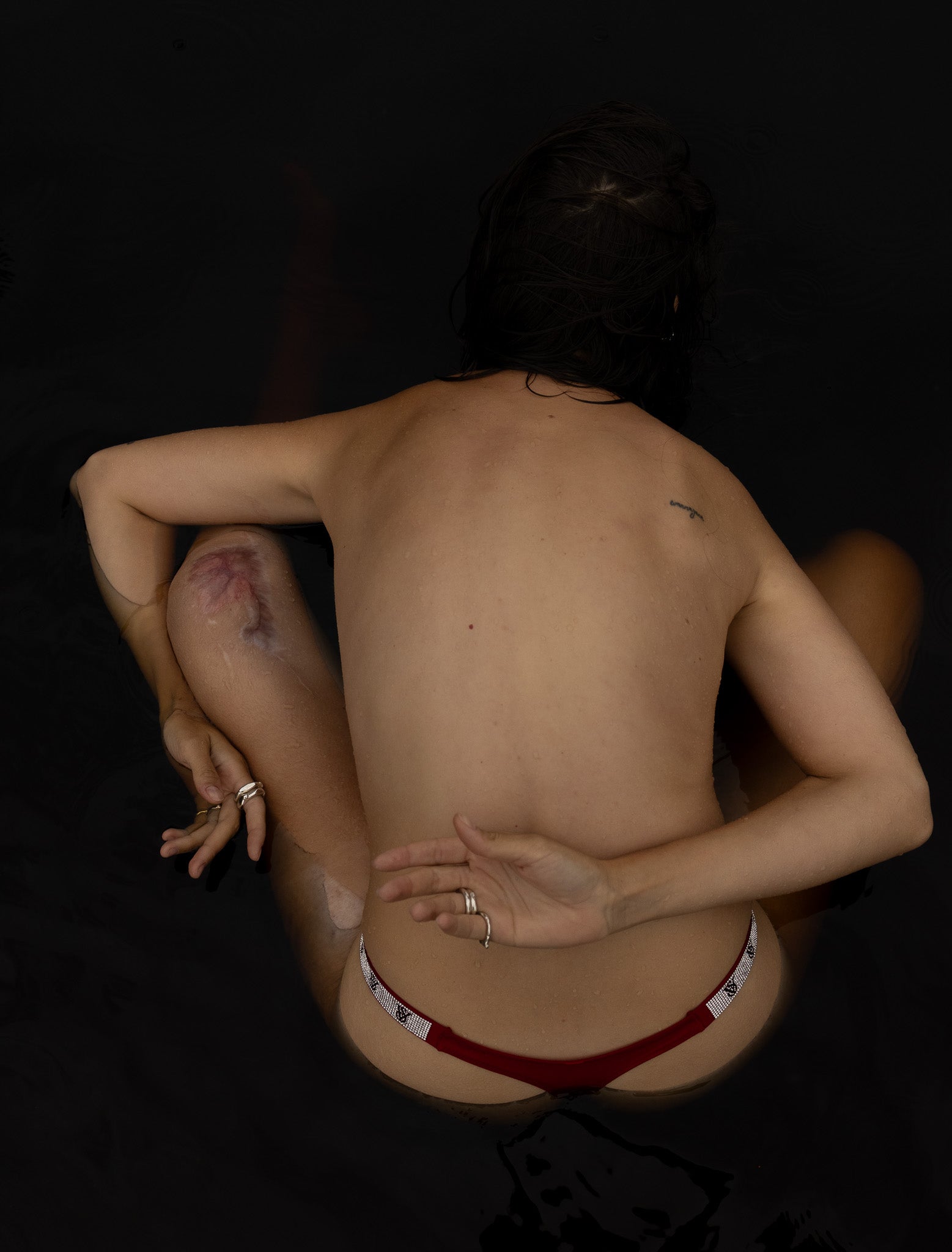
Since these images were created, and over a year after the motorbike accident and the first 8 surgeries, I’ve had another 2, a bone graft, been fitted with an extension nail and 9 more incisions trace my skin.
You don’t ever get used to waking up to visible mutations of yourself, but you do learn to let them speak before you name them. Releasing control has been practice but I’ve never let fear or panic dictate my relationship to my body. It is an ongoing conversation, one I am gentle about, one that makes me feel whole. That day at the lake, it was painful and strange to rediscover how my body moved, what story it told, knowing I wasn’t yet at the end of my mutations. With height discrepancy, muscle graft and missing soft tissue, much was happening below the skin and the apparent scars. Scars that now feel different as they have been joined by more pain and story.
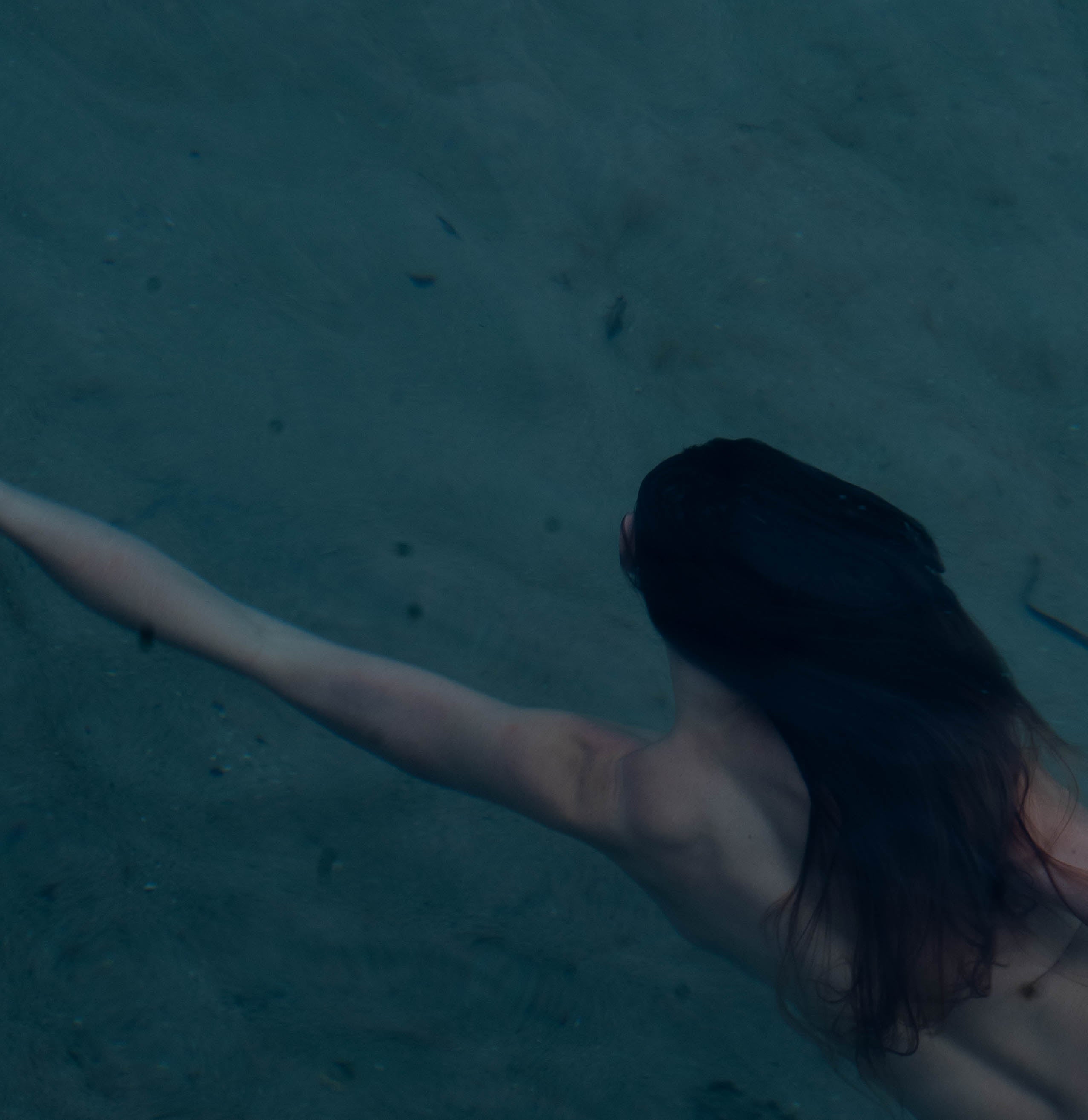
Time isn’t linear, and what I felt in the ti tree lake is just as relevant now. That day was play, connection to Country and the storm overhead. I was stretched between the wetness of the lake and the rain. Absolute immersion.

How do you navigate the delicate balance between honouring your journey and not letting it define you? Do you think this is possible?
This question speaks differently to the parts of me: the artist, the human, the lover, the survivor, the sister, the daughter. It changed me in ways that don’t define me but redefine my relationship with others, with Country, with myself. I feel aware that I have many outcomes made possible or impossible based on how I choose to live this story. All I can say for certain is I find power in change and I will never settle for a static definition of myself. “Repeat after me: Future me will fulfill all my dreams because present me supports them” - @somuchloveindisclub
As the eldest of your sisters, you’ve held a significant role. Having navigated the high fashion industry and its many pressures, what guidance would you offer them about finding their own path — and learning to love what they see in the mirror, even when it feels/looks different?
Ah! My siblings are terribly fierce, and as I witness them, they are actually often the ones to inspire me to find my path and love what I see there. All four of us of mixed heritage have had our visceral battles with reconciling what the world demands of our unique looks. I guess the way we survive it is by recognizing ourselves in each other amongst the very diversity and differences we hold. Since this accident, my sisters have held me to the reverence I owe myself and sang to the parts of me that are broken and disfigured.
A monumental question Mon, in a near subliminal paced world where we must remind ourselves and each other of the absolute value of uniqueness. As you know, it’s not a one step solution, but one made possible by community. In our family, I heard its cry through the words Nidala sang before she released ‘Body of Mine’, and see it every day in the beauty she’s claimed. I am learning it with Shala-Tia, born artist, reclaiming their story and pronouns. We see it in our youngest sister Cassie-Rain, who at 14 buzzcut her hair, and at 5’10 wears her birthmark proudly on her face, amongst the gen z makeup trends playground. This is the same girl that recently told me she wanted to get her legs shortened to fit in. Imagine the affront as a once lanky supermodels idolizing girl, and now wheelchair owner with a limb defect! And as much as I love our radically candid relationship, I was glad she quickly felt that voice pass.
It’s part of our growing pains. As women, only we can learn to change the lens we use on that mirror. As the eldest, it has been the single handedly most difficult part, made softer only by the trust you have in your sister to find herself in it.

If you could speak to women who are navigating unexpected life changes or learning to honour their bodies in new ways, what would you want them to remember?
Patience! Let things settle before you tell your body it is truth. Step back from it.
There is so much power in perception, and we have more control than we think. We are constantly mutating and changing, which should give us reprieve in the mission to find perfection. I love this, Bruce Lee said it best - “Water can flow, or it can crash. Be water, my friend.” Breath!
Cycle breathing has saved me more than once. Learn to let things burn, ashes make fertile ground and offer new opportunities in yourself, as well as freedom! Get curious about those changes instead of trying to freeze your skin and the idea you have of your ultimate self.

In a world that often asks us to keep producing, it’s been beautiful to watch you honour a slower rhythm — allowing yourself the space to heal and listen. As you emerge from this cocoon, how do you feel these teachings will shape your work and the way you meet the world? What feels ready to unfold next?
I’m glad you brought that up!
Slowness is underrated and I will be sure to take that with me for what comes next. I never stopped building, designing and creating in my mind - but it was like a nebulous kaleidoscope grasping at a body that was on overdrive. It had nowhere to land.
Now that the healing is softer and the pain is recognized, I can safely start to feel who I am, what I want, and unite my thoughts, words and actions. I am not at the end of this painful mutation, but I have a few projects and am curious to meet myself on the other side. See what that Milari will do with it all.

What of the inbluem products, if any, have supported you through this journey and how?
Touching your skin, speaking to your skin - it shifts things inside you. That conversation is made palpable when I apply my oils and serums. The ceremony is traced with focus.
With native botanicals and bush foods from my country, the resonance is clear for me. Kakadu Plum, gubinge in my language, which you harvest back home in WA, was one of the first potent serums I used with argan oil on my grafts. And Finger Lime is always an ally, with my perioral dermatitis and recent tattoos.
There is simply never a time where your products don’t feel right. I was able to use them at a time where most of my favourite oils and serums were written off because of risks and sensitivity! Now I need your next release, been needing it ever since you told me what was coming!
I need it. Now.
Tayte, the images you created with Milari are deeply moving. What does this creative project mean to you — and why does it feel important to share with the world?
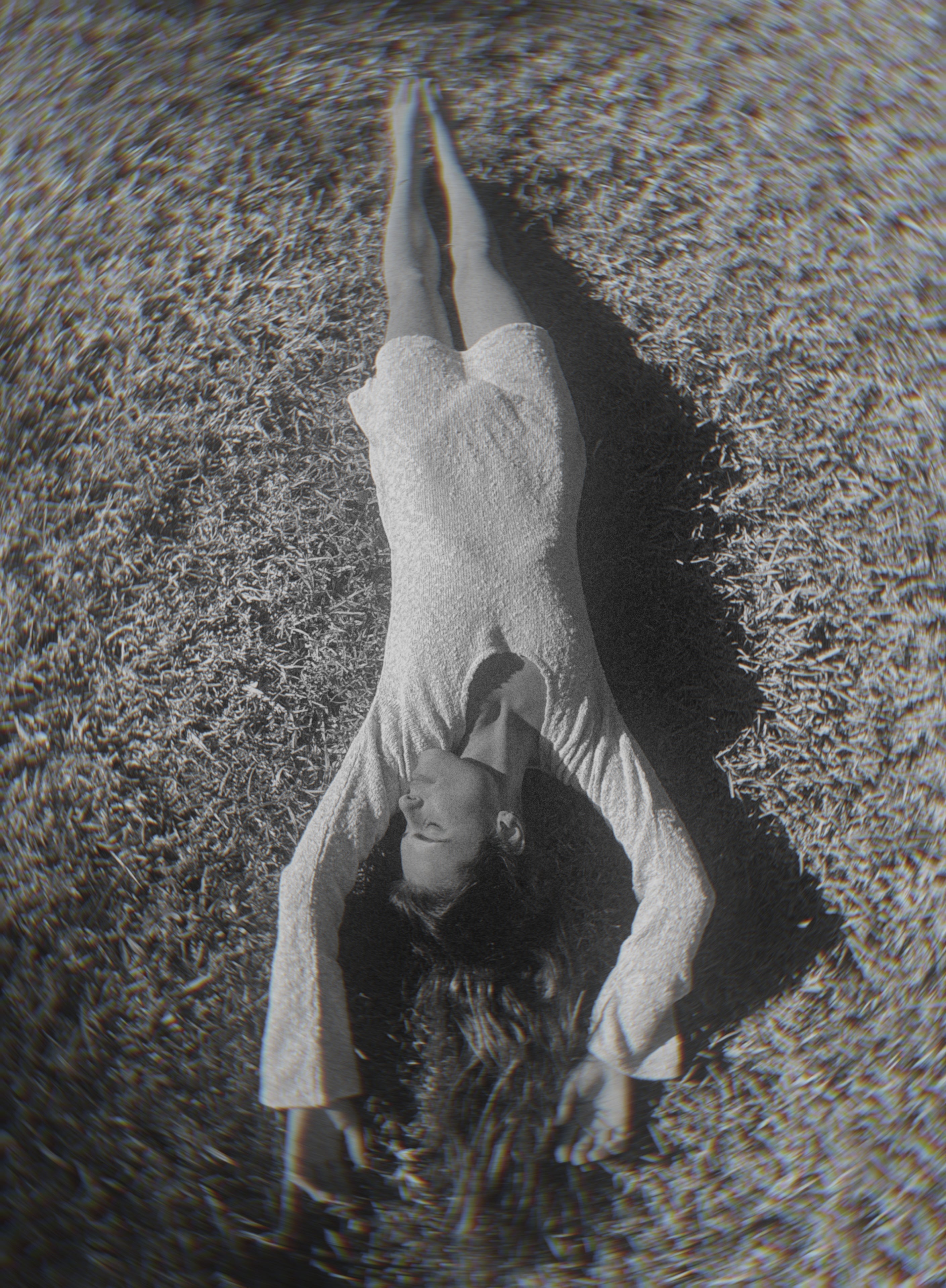
This project has been an incredibly powerful journey of witnessing Milari in her immeasurable strength and power. It has been such a privilege to have been entrusted in capturing her energy, resilience and deep connection to Country. To bear witness to this has moved me profoundly. The rain and thunder came down in different moments throughout the shoot, changing our approach at times moving through different areas that we felt called too. This meant we worked with different lighting, shadow and backdrops, which I feel continued to shape and represent the story telling.
Being on country with Milari was an honour and experiencing the connection we all felt that day will stay with me. I’ll never forget her being in the water and looking up to see a big beautiful white bird in a tree above, another observer and witness.
It feels important that people see these images and hear from Milari about her journey and process. She has such a strong message of expression, creativity and connection that I think is felt within this series.

Milari J Barker is a multidisciplinary creative working across visual arts, set design, fashion and production. With experience both internationally and in traditional Aboriginal context, her practice moves between art direction, fabrication, styling, and performance. Barker has collaborated with international fashion houses, independent designers, and creative studios and founded the interdisciplinary platform Membrane [mmbrn] in Paris. Her work and visual storytelling explore material culture, image-making, and the spatial language of fashion and art.
Tayte Jeffreson is a Northern Rivers based photographer exploring the quiet language of the human body. Through light, shadow, shape and form, she explores the beauty that exists beyond convention, where scars, softness, strength, vulnerability and story are all given equal space. She is drawn to the details that tell our stories and the ways we inhabit ourselves.
Leave a comment
This site is protected by hCaptcha and the hCaptcha Privacy Policy and Terms of Service apply.